
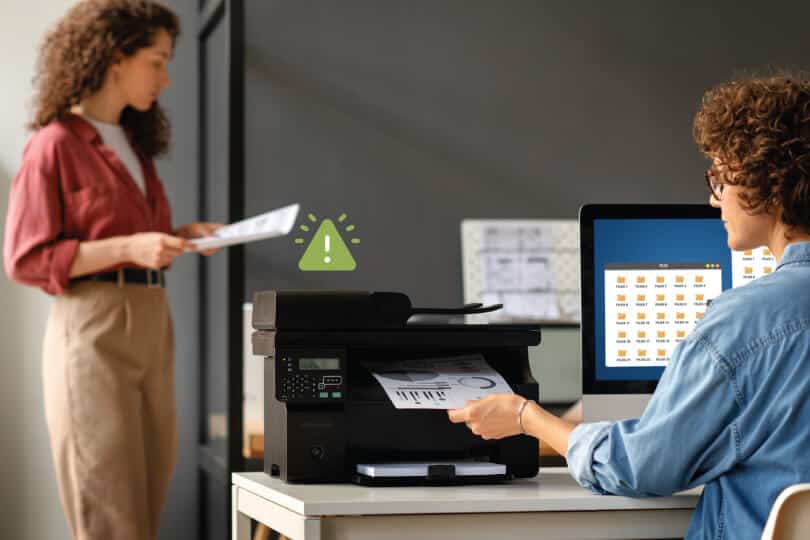
For many schools, printing is simply part of everyday operations. From lesson resources and safeguarding reports to parent communications and exam materials, printed documents remain essential in education. Yet the significant role printing plays in data protection, safeguarding, cost control and environmental responsibility is often overlooked.
With schools handling large volumes of sensitive personal data relating to pupils, staff and families, secure printing is no longer a “nice to have” but a core operational and compliance requirement as outlined by the Department of Education’s data protection guidance for schools.
At Copy Print Services, we support schools across the North West with printer leasing, rental and managed print solutions, and have a clear view of the operational pressures education teams face.
The risks associated with print security in schools
Schools process highly sensitive information every day. Yet printers and multifunction devices are frequently among the most overlooked data security vulnerabilities within an education setting. Without appropriate controls, printed documents can easily be lost, misplaced or accessed by unauthorised individuals, creating serious safeguarding concerns and potential GDPR breaches.
Recent industry research into print security found that 67% of organisations experienced data loss linked to insecure printing in just a 12‑month period.
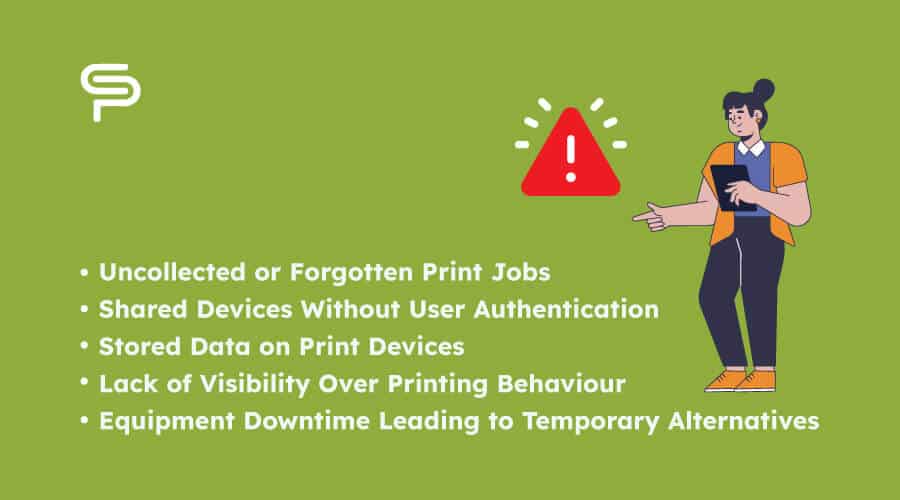
Common risks include:
Uncollected or Forgotten Print Jobs
Safeguarding reports, SEN information, exam materials and personal staff records are sometimes left in printer output trays, visible to anyone passing. In busy school environments, this creates a clear risk of confidential data being seen by pupils, visitors or staff members who should not have access.
Shared Devices Without User Authentication
Many schools rely on shared printers located in staff rooms, reception areas or departmental offices. Without authentication measures, documents can easily be collected by the wrong person.
Stored Data on Print Devices
Modern multifunction printers operate much like computers and often store data on internal hard drives, including previously printed or scanned documents. Without proper configuration or scheduled data wiping, this information may remain accessible.
Lack of Visibility Over Printing Behaviour
Without print monitoring tools, schools may have little understanding of who is printing sensitive documents, how frequently they are being printed or whether unnecessary duplication is occurring.
Equipment Downtime Leading to Temporary Alternatives
When printers fail unexpectedly, staff often use alternative devices or temporary solutions, increasing the likelihood of documents being sent to the wrong printer or left unattended.
How printing and data protection are interlinked

Schools face unique challenges when it comes to data protection. Unlike many workplaces, they manage large volumes of highly sensitive information while operating in busy, open environments where staff, pupils, parents and visitors frequently interact.
Under GDPR, schools have a legal responsibility to protect personal data at every stage of processing, and this duty is even more stringent where children’s data is concerned, as set out in the ICO’s guidance on children and the UK GDPR.
A printed document is no less a data asset than a digital file. Yet data protection policies often focus heavily on cyber security while overlooking physical documents. A confidential report left unattended can present just as serious a breach as a cyber incident.
Secure print management helps schools:
Control who can print, copy or scan sensitive documents
Ensure confidential information is only released when the authorised user is physically present
Track printing activity for accountability and audit purposes
Reduce the risk of data being stored insecurely on devices
Why secure printing practices are so important for the education sector
Schools operate in uniquely busy and open environments and are responsible for managing some of the most sensitive personal data held by any organisation. From safeguarding records and behavioural reports to staff HR documentation, the volume of sensitive information handled daily is significant. Something as simple as a confidential document being left unattended on a printer can create serious safeguarding and compliance risks.
Beyond compliance, secure printing supports the smooth day-to-day running of a school. Poorly managed print environments often result in wasted time, staff frustration and unnecessary duplication. Forgotten print jobs are a common issue and can contribute to excessive paper and toner usage, placing additional pressure on already stretched school budgets.
Introducing secure printing practices allows schools to take greater control over how documents are produced and collected. Measures such as user authentication, monitored print activity and rules around colour printing help reduce waste while improving accountability.
In many cases, strengthening print security not only supports GDPR compliance but also delivers measurable operational and environmental benefits.
Implementing secure print practices in schools
Improving print security does not need to be complex or disruptive. For most schools, the best place to start is with a professional print audit to understand how devices are currently used across the organisation.
A thorough audit provides visibility into:
How many printers are actually required
Where devices are best located
How staff and departments use printing
Bottlenecks during peak periods
This knowledge allows schools to make informed decisions about whether to purchase, lease or rent equipment, with most schools typically reviewing arrangements every three years.
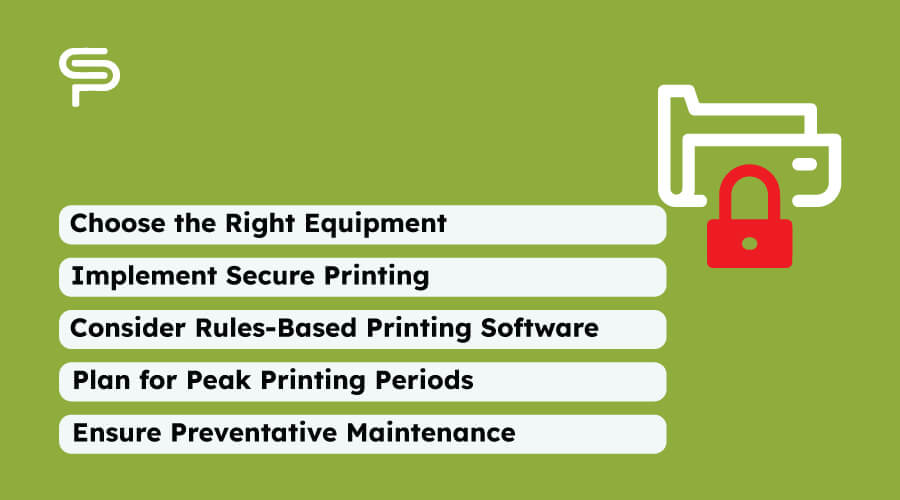
Choose the Right Equipment
Selecting the right machines is critical. Factors to consider include speed, colour requirements, scanning functionality, security features and device reliability. Schools often have different printing demands across departments, so a one-size-fits-all approach rarely delivers the best results.
Implement Secure Printing
User authentication, such as PIN or card/fob-based printing, ensures documents are only released when the user is physically present at the device, significantly reducing the risk of confidential documents being left unattended. All full-size MFPs (multi function printers) include in-built PIN release, which is the easiest and most cost-effective way of introducing print security into a school and ideally suited to environments with just one or two print devices.
Larger schools with multiple devices often gain more control and efficiency by combining PIN release with the additional benefits of server-based software, for example follow-me printing, full accounting and “who printed what”.
Consider Rules-Based Printing Software
For schools with multiple printers, investing in print management software may be worth considering as it can introduce intelligent controls including:
Restricting unnecessary colour printing
Monitoring usage across departments
Redirecting large print jobs to faster devices
Providing reporting to support cost management
Plan for Peak Printing Periods
Schools experience predictable high-demand periods, particularly at the start and end of terms or during exam seasons as well as during busy times such as pre-school start, break, lunch, and when children leave at the end of the day. Strategic device placement and workflow planning can prevent delays and reduce staff frustration.
Ensure Preventative Maintenance
Reliability is crucial in education settings. Proactive servicing, particularly ahead of the new academic year, helps ensure devices remain fully operational and reduces the risk of disruption during term time.
The value of working with a specialist print partner
At Copy Print Services, we help schools take a joined-up approach to printing, advising on whether to buy, lease or rent equipment, while ensuring data protection, cost control and environmental responsibility sit at the heart of every decision.
Managing printing internally can place additional pressure on school staff who already oversee wide-ranging operational responsibilities. Working with a specialist partner that understands the education sector can provide guidance, technical expertise and ongoing optimisation.
Printing will remain an essential part of education for the foreseeable future. However, as data protection responsibilities increase, school leaders should view secure printing not simply as an IT decision, but as a safeguarding and governance priority.
For more information on services for schools, or to request a print audit, please get in touch with our team.
